What is a Demand Charge?
Businesses don’t use electricity in the same pattern throughout the day. When they open, they put on lights, computers, air conditioning, some machinery, and so on. They may use more power at a certain time of the day, when they turn their ACs on during hot summer days, or when they operate heavy equipment. Since utility companies must be able and ready to supply such additional power when needed, they charge an extra fee to cover the cost of offering this service. This fee is called a Demand Charge, sometimes referred to as a Network Demand Fee.
Does my business pay Demand Charge?
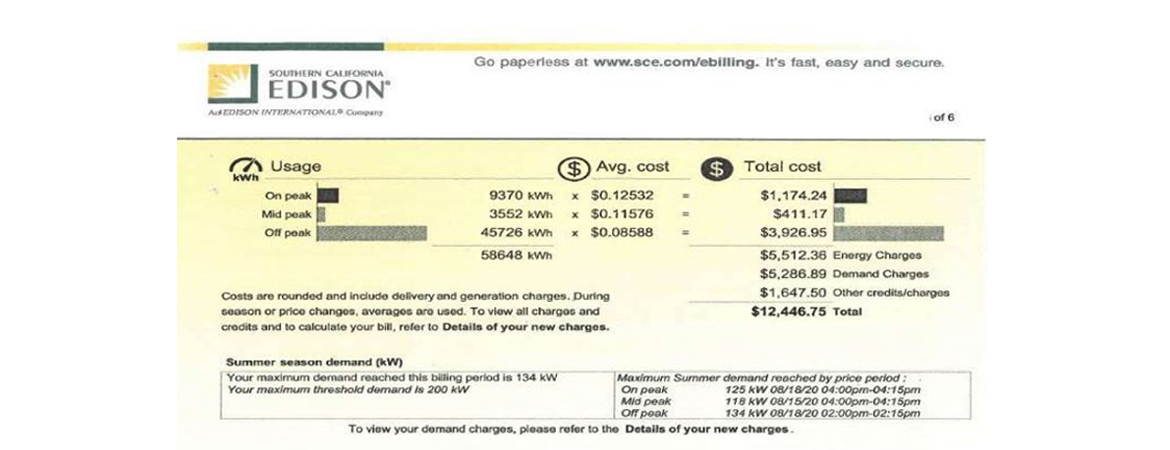
Every commercial customer’s monthly energy bill is made of two parts. The first part is regular energy charges, including the cost of actual electricity units, connection fees, fees imposed by state and local authorities, and taxes.
The other charge on the monthly bill is more complicated. It’s what’s known as a Demand Charge. Depending on how and when you use electricity, this charge may make up a significant portion of your monthly energy bill. This is why effective demand charge management and demand charge control can be important for businesses with significant electricity usage.
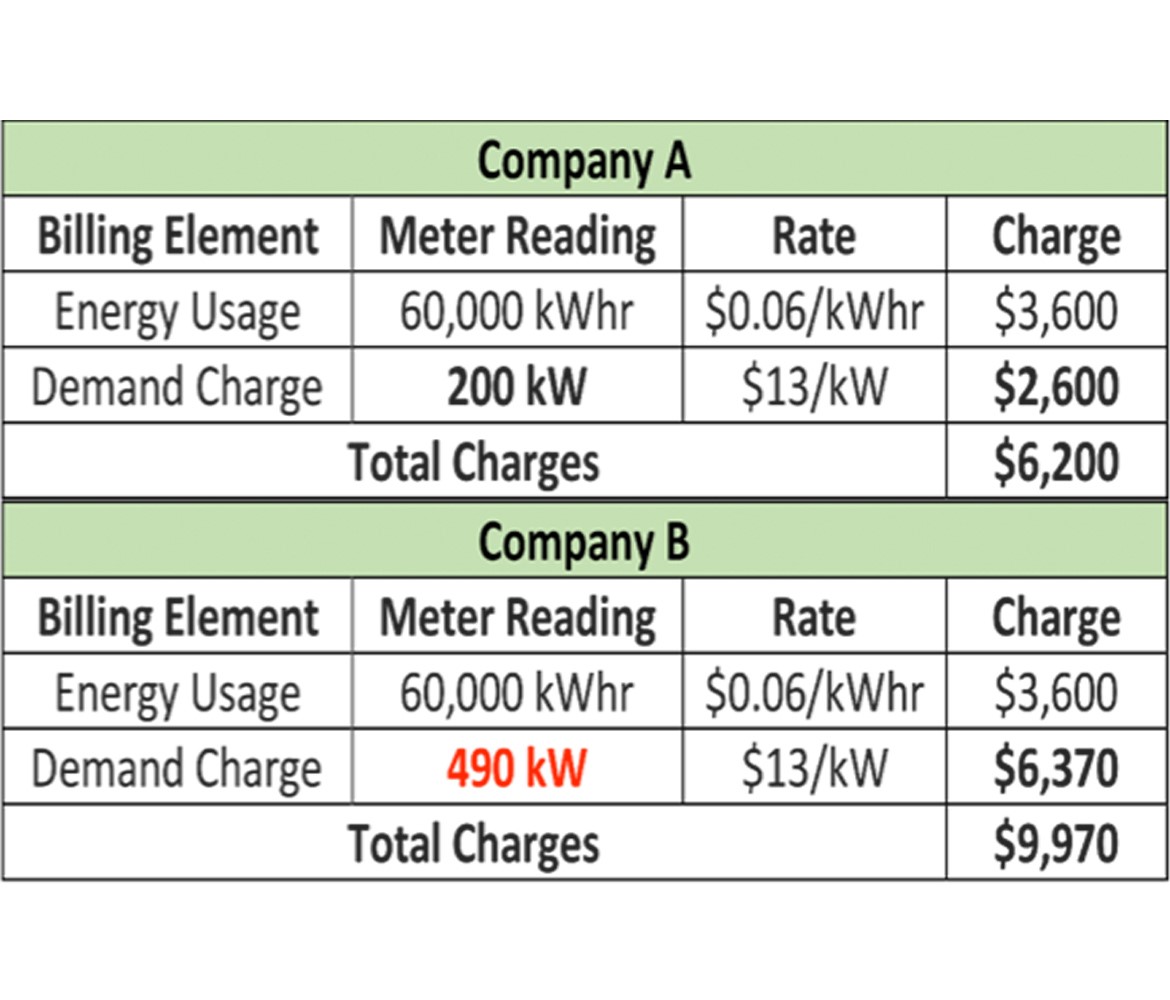
How do utility companies calculate Demand Charge?
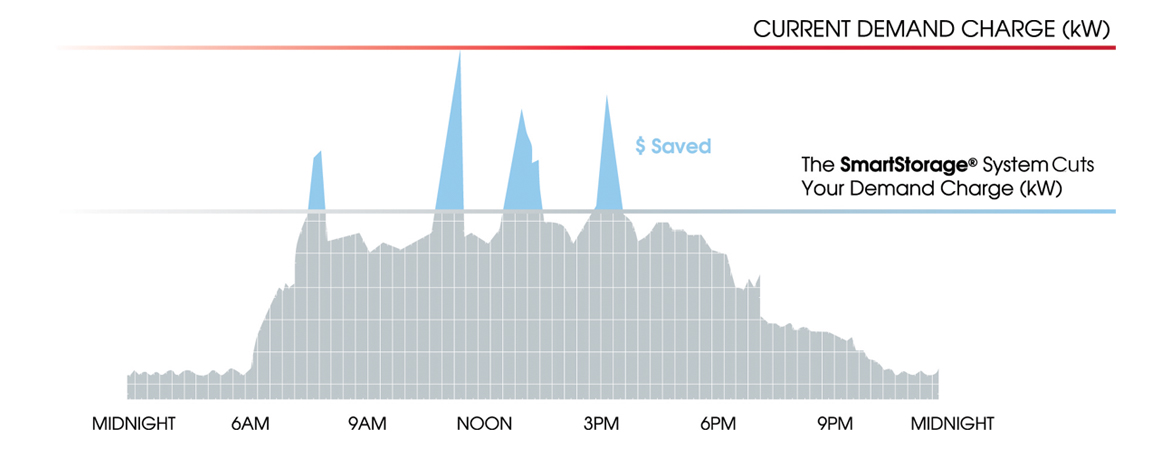
Demand Charge is calculated by dividing every day (24 hours) into 96 periods of 15 minutes each and then calculating the energy consumption in each period separately. So, within one month, you will have 2,880 demand periods (30 days x 24 hours x 4 periods per hour). The 15-minute period with the highest power consumption is considered the basis for calculating the Demand Charge for that specific bill cycle.
However, utility companies offer a demand level allocation for every business user, different from user to user, and charge Demand Fees when the allocation is exceeded. Here’s an example: Let’s say a utility company charges $10 per kilowatt per month for Demand Charge, and a business’ peak 15-minute usage was 57 kilowatts. In this instance, $570 in Demand Charges will be billed. This Demand Charge then gets added to standard energy charges and other fees and taxes.
Who needs Demand Charge Control?
All businesses can benefit from managing their peak electricity usage to reduce Demand Charges or, at least, bring them to a minimum. Peak demand reduction focuses on lowering those short periods of unusually high electricity consumption that can increase a monthly bill. For businesses with substantial electrical loads, commercial peak shaving can become an important part of ongoing energy management.
Do Businesses pay Demand Charges, if they have Solar Systems installed?
If a business has a solar system installed and is using a lot of electricity over the baseline when the solar system isn’t producing, such as before the sun comes up, after the sun goes down, or on a particularly rainy day, the needed electricity is supplied by the utility company rather than the solar system. It therefore counts as usage from the grid and can be charged as the basis for the Demand Charge.
This is one reason solar battery storage can work alongside solar generation. Stored energy can be available during periods when solar production is unavailable and electricity demand remains high.
How can I reduce the Demand Charge?
Demand Charge Reduction can be achieved in various ways, including the use of backup batteries and implementing equipment operation timing plans to avoid higher levels of electricity usage at one time. These strategies can support automated peak shaving, helping businesses manage periods when electricity demand reaches its highest levels.
Peak shaving batteries can also be used to supply stored energy during high-demand periods rather than relying entirely on electricity from the utility. The right approach depends on the type of business, its equipment, and its pattern of electricity use.
Buy, Lease, or Share Savings
Depending on the type of your business and the amount of power it uses, First Energy Systems can offer a plan to supply the necessary equipment for controlling business Demand Charges. Options range from buying the necessary Battery Backup systems to supplying different software packages, special sensors, and operation switches.
The same equipment and systems can be leased, or First Energy Systems can even structure an arrangement around sharing the savings generated through peak demand reduction and demand management.